My interview with Victoria from Beach House appeared in the Charleston City Paper in May, and now that they're visiting Vancouver tonight, I've realized I never posted it. Correcting my mistake right now.
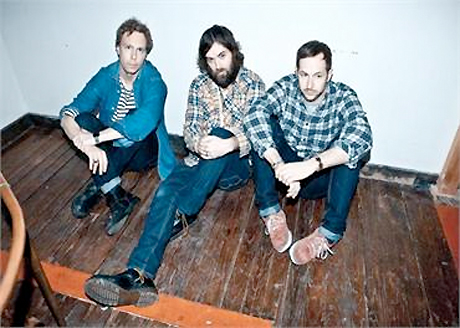
Not your average East Coast beach bums: Beach House's Alex Scally and Victoria Legrand
There's a big difference between indie pop duo Beach House's Teen Dream and singer Katy Perry's "Teenage Dream." Fans of the former can exhale that long breath they've been holding since 2010: Bloom,
Beach House's fourth album (due May 15 on the Sub Pop label), is as
magical as it is morose, an atmospheric and evocative wonderland. Fans
of the latter — well, enjoy the Perry karaoke.
Since 2004, Victoria Legrand and Alex Scally have been the somewhat
mysterious forces behind Beach House. Rising up out of Baltimore's
increasingly relevant DIY arts scene, the pair make music befitting the
arch loneliness and beauty of director Wes Anderson's film. If Bloom
were a movie, it might be about the terrible ways we learn to live in
the moment, the kind of lessons that come from a loss so sudden it
unhinges your grip on life and forces you to think about making the most
of things — that is, if Legrand was the type to disclose her private
life to the press. She's not, but upon hearing some personal reflection
about what the record meant to this listener, the notoriously private
singer/songwriter admits that recording Bloom was Beach House's biggest challenge yet.
"Each album we've made is a moment in our lives," Legrand says. "Some
people have a scrapbook or a journal, and we have these records. I'm 30,
and now it's been a long time making music, but Bloom has been
one of the more intense experiences of making an album for us. That's
probably the most personal information I can give about it."
Delta Rae's Eric HÖlljes (far right) finds it strange to be on VH1
After playing music for years, brothers Eric and Ian Hölljes decided to
start a band, but not just any band. It would have rock and soul and
folk and some alt-country elements, and they wanted four-part harmonies
with two women. It was to be called Delta Rae. And so they enlisted
their sisters, Brittany Hölljes and Elizabeth Hopkins, the former by
birth and the latter by honorary status. They wanted an innovative
drummer who could switch seamlessly between a traditional kit and a
garbage can/metal chain combo, and they found one in Mike McKee. Of
course, they also needed a fluid bass player to flesh out the sounds of
their guitars and Eric's piano and keys, so in stepped Grant Emerson.
But Eric and Ian Hölljes never dreamed about making money doing what
they loved.
"When we started the band we had humble expectations," Eric says with a
laugh, still sounding a bit dumbstruck. Last year around this time, the
band had raised $28,000 from 293 backers through Kickstarter to make
their first record, Carry the Fire. By February 2012, they were signed to Sire Records, a division of Warner Bros. Records.
"We were hoping we could make a life out of it and that felt very
ambitious in and of itself, and it still does — to make art and be able
to survive off of that. But we really threw everything we had into it,"
Eric says.
Some more than others. Eric adds, "My brother bought a house and we all
moved in together in North Carolina. Right from the first week we were
rehearsing, and Ian and I had been writing songs together for the band,
just like, imagining what it would be like. Then we had our first show
within a month, and after that we'd pile into a couple of cars and drive
anywhere we could get a gig, and that was three years ago. It's been an
amazing trip."
Although his childhood dreams are coming true, Eric finds the whole
experience to be a bit surreal. "We're going to be on VH1 tomorrow
morning. We all grew up watching MTV and VH1 nonstop, so the fact that
we're going to be on that channel — that part doesn't feel real. That
part feels pretty strange and amazing. I don't think I imagined this. I
maybe dreamed of it and hoped for it, but this is exceeding a lot of
what I imagined."
And it happened fast. After capitalizing on a chance connection to Sire
Records co-founder and Warner Bros. Records head honcho Seymour Stein,
the six-piece went to his Manhattan office and sang a few bars. Stein
ran out the door, but he wasn't being rude. He was insisting his
colleagues and underlings come listen. Delta Rae had arrived.
But between the successful Kickstarter fundraiser and a special CD
release party in their hometown a few weeks ago, there have been plenty
of heady, heartening reminders that Delta Rae has cultivated a dedicated
following — all without the major label support.
"We have the most amazing fans," Eric says. "It was such a risk. We were
trying to raise $20,000, which just seemed so ambitious to us. When we
started, we thought we could definitely fail. But the fans exceeded all
of our expectations and hopes. We're so grateful. And they're part of
this record and this process and this band."
At one recent show at the Cat's Cradle in the band's hometown of Chapel
Hill, N.C., the members of Delta Rae discovered exactly what they meant
to their fans. "They made over 350 paper torches, little lanterns, and
we had no idea about it. But then when they called us back for the
encore, the whole crowd had lit these 350 torches and were cheering us
on, and it was a very powerful, almost magical, experience. It blew us
away."
That feeling, it seems, is mutual. The raves online don't just praise
Delta Rae's music, but their live shows as well. All six have been known
to leap off the stage and work their way into the center of a huge
crowd and belt out a few songs. YouTube videos capture the energy and
urgency of their harmonies, pushing each other louder and larger until
the entire room feels pressurized, like a balloon about to pop. Think of
it as an epic campfire: accessible, catchy, and engaging. And
miraculously, Carry the Fire captures that feeling.
"I love music, but I find myself sometimes getting distracted or, dare I
say, bored, at shows," Eric says. "As a band we wanted to be exciting
and wanted to keep it interesting for the audience. We really embraced
that with our live show, and we wanted to translate that onto the
record, so we bring horns and strings and trash cans and try different
things vocally. It's a bit more experimental. We try to be exciting."
Blitzen Trapper's Eric Earley isn't a talkative man. He's a mumbler on
the phone, not terribly forthcoming, and uncomfortable, it seems, with
getting too much attention, but he laughs a lot. It's a sound that comes
up frequently when he's faced with questions that make him look at his
life, which has been mostly spent in and around Portland, Ore. It's a
strange but charming sort of reaction, given Earley's concession that
the band's latest album, 2011's American Goldwing, is "pretty nostalgic."
"I don't really think about the past," he says. "I think there's a
reason for whatever songs I was writing at the time. It's not
necessarily a matter of confidence, but knowing yourself better as you
get older." He pauses, then laughs. "Besides, there's good things and
bad things about getting more confidence as you write songs."
A few things stand out when you listen to Sara Watkins' latest album, Sun Midnight Sun (Nonesuch):
heartbreak and heartache are plentiful, her famous friends are out in
full force (including Fiona Apple, Jackson Browne, and Benmont Tench),
and for a fiddle virtuoso coming off 20 years as one-third of famed folk
band Nickel Creek, she sure does love to let her pop star shine.
Watkins knows this new record is a departure from her 2009 eponymous
solo debut. It's all part of the new reality she's been cultivating —
growing up, getting outside her own mind, and challenging herself.
"The first record was establishing a home base, collecting the sources,
the places I came from musically," Watkins says, speaking just before
the start of a summer tour with Browne. "A lot of my past is represented
on the first record. I knew that's what I was doing, establishing a
base camp. Making my second record, I got to enjoy stepping away from
that, and I got to enjoy collaborating with some new people, namely
Blake Mills [from Dawes], who produced the record. We could explore and
discover each song as we were recording it."
Marlie Collins and Gaelan Beatty get kitschy in Xanadu.
“And you’re skating away, looking over your shoulder at him while he watches you…”
Glide, glide, backwards glance, bang! As director Dean Paul
Gibson guides her, Marlie Collins, the tall blond star of the Arts
Club’s production of Xanadu, stumbles on her rollerskates and
botches her exit from the Granville Island Stage. Gibson barely pauses.
“Perhaps a bit more gracefully next time?” he suggests playfully without
missing a beat.
It’s
10:30 a.m. on Victoria Day, the star of your show is in Portland,
Oregon, and the border lineups to return to Canada are already four
hours long. Any other theatre company would be screwed, but the weekly
improv soap opera Sin Peaks is all about deftly handling surprises. After all, the first rule of improv is “Never say no.”
The Cuban-born, Miami-based singer shakes up the spotlight concert series
If Susana Behar looks familiar, chances are you might have seen her in
the audience during previous Spoleto and Piccolo Spoleto festivals.
After all, she's been attending them for the last eight years. That's a
long time to hold on to a dream, and finally Piccolo Spoleto attendees
will be privy to the acclaimed vocalist's exotic repertoire — the
Sephardic music of her ancestors, Latin American folk, and a brief,
passionate pit stop in flamenco — a set list that ultimately unfolds
like a timeline of Behar's incredible life.
k.d. lang and the Siss Boom Bang make their much-anticipated Spoleto debut at The Gaillard
It is possible that one may never again experience the kind of
soul-fulfilling bliss that accompanies hearing k.d. lang's rich and
resonant cover of Leonard Cohen's ubiquitous "Hallelujah." Unless, of
course, you already possess tickets to her sold-out show June 3 at the
Spoleto Festival.
After years of laying low, the 50-year-old Canadian singer/songwriter,
born Kathryn Dawn Lang, made a splashy return to the public eye in 2010,
streaming into millions of homes around the world during Vancouver's
opening ceremonies for the Olympics. Her stunning rendition of the
aforementioned Cohen staple triggered a collective recollection: Oh
yeah, k.d. lang, what's she up to? Where's she been?
Danny Kalb is still bridging blues, rock, and folk styles
Life hasn't always been kind to overlooked blues guitar legend Danny
Kalb. After an all-too-brief burst of fame in the '60s as founder of the
Blues Project, Kalb found himself out of the spotlight. He continued to
make music, but failed to achieve the high-profile recognition of, say,
his friend Bob Dylan or even his former Blues Project bandmate, Steve
Katz of Blood, Sweat & Tears. But now, at almost 70 years old, Kalb
is gearing up for a comeback, which includes a tour stop at the Piccolo
Spoleto Festival. When the blues is your life, why let something like a
recent stroke get in the way?
And click here for the link to the related online news story.
By Andrea Warner
"I tend to lie in interviews. But I haven't lied today."
Al
Spx's confession comes about three-quarters into our meeting. I can't
help but laugh. So far, the 24-year-old singer-songwriter from Toronto
has been guarded yet candid, and funny as hell. Could she be playing me?
Sure, but there's such sincerity in her statement, it's like she's
surprised herself by letting me in on the joke.
Spx is the bruised-but-beating heart of her own six-piece band, Cold Specks, and about to release her debut album, I Predict a Graceful Expulsion.
It's a mouthful and a mind full ― and arguably among the most original
records to come out of Canada since the Arcade Fire's debut almost a
decade ago. It chronicles a messy number of years in Spx's young life: a
falling out with God, depression, suicidal thoughts. Every single word
wrenched from her bones in a last-ditch effort at preserving her sanity
and sating her loneliness.
Since their self-titled debut EP in 2009, Suckers
have laid claim to all the key descriptors befitting of a "buzz band":
Brooklyn-based, art pop, sampler happy. Riding the high of acclaim, the
three-piece (cousins Quinn Walker and Austin Fisher, and childhood
friend Pan) expanded to a four-piece with the addition of drummer Brian
Aiken and released their first full length, Wild Smile, in 2010.
After
lengthy tours honing their performance chops -- and often upstaging the
headliners for whom they were opening -- Suckers retreated to work on
their follow-up album. The result? The catchy and clever Candy Salad, and the surprisingly casual reveal that Aiken has left the band.
"There's just three of us at the moment," Pan tells Exclaim! as Candy Salad's late April release date approaches. "We never made a major announcement or anything."
"Brian
is moving to Thailand to start a new life. He bought a one-way ticket,"
Fisher adds, by way of explanation that this is a permanent change to
Suckers' lineup.
They don't go into any further details, but
say that the end result "has worked out nicely," and they've added a
drummer and keyboardist to their touring band to fill Aiken's void.
"We're
just now starting to play all the songs and promote them, so nothing
else is really going to change immediately," Fisher says. "Until we
start writing again."
Pan explains: "And I don't think that will change. If anything, with just three writing songs, it will make it faster."
As previously reported, Candy Salad is due to arrive April 24 via Frenchkiss Records. In support of the new album, Suckers will be out on a North American tour come May. You can see all the stops listed below.
And click here for the online news story that ties in to this article.
By Andrea Warner
The Ting Tings' multi-platinum debut, We Started Nothing,
offered catchy, frenetic pop ditties that proved fun for club
freak-outs, cross-training and everything in between. Jules de Martino
and Katie White became overnight sensations thanks in equal measure to
their sound and the ethos behind it. In almost every interview, the
Manchester-based duo eschewed popularity and commercialism in favour of
art and creativity. In kind, their live shows proved a real Breakfast Club of champions, with the art-school chic bouncing alongside power-poppers, DIY post-punks and second gen emo-lites.
So, could de Martino and White make lightning strike twice with their long-awaited follow-up, Sounds from Nowheresville?
In short, not yet. The record dropped about six weeks ago, and though
it might not be what the industry or Ting Tings' fans expected, de
Martino says it's exactly what he and White envisioned when, halfway
through the recording process, they deleted six songs the label loved,
fled the country and started fresh. Pretentious, self-destructive snots
or idealistic, uncompromising artists? You be the judge.
Norah Jones has never quite shaken off the wide-eyed ingénue persona of her debut, 2002's Grammy-winning Come Away With Me. But her new record Little Broken Hearts ―
chock full of grown-up problems like messy break-ups, murder fantasies,
and infidelity ― should shatter any preconceived notions about the
33-year-old singer/songwriter.
"I wrote a few songs that were a
little mean, but it's not like I'm such a bad girl," Jones laughs. "I'm
an adult. I'm not a little kid. I don't really mind when people have a
misconstrued perception of me. It's not like I'm pulling one over on
people. I am a nice person." But she and collaborator Brian Burton, aka
Danger Mouse, have a lot of fun playing with that "nice girl" image. The
two met years back and talked about recording together, but it kept
getting pushed back. Finally when they were ready to sit down, Jones
arrived at his studio, freshly wounded from a defunct relationship,
armed with only a couple beginnings of songs. She and Burton started to
talk and they built Little Broken Hearts from the ground up.
There were plenty of raised eyebrows when it was announced that Norah Jones would be making her next album with Brian Burton, aka Danger Mouse. She's ruled the adult contemporary airwaves since her 2002 Grammy Award-winning debut, the softly pleasing radio staple Come Away with Me. Jones's talent is indisputable, but there's been plenty of scorn levied her way about what she does with her gifts.
Her upcoming record, Little Broken Hearts,
is a defiant middle finger to her critics and the man/men that have
done her wrong. Not that Jones really cares what anyone thinks. But she
knows that once people have come out of Hearts' other side, her
"good girl" reputation may not be intact. The album dwells in some dark
and dangerous corners, including the stellar "Miriam," a spooky
stand-out that finds Jones sweetly singing a fantasy about killing the
woman who stole her man.
"Obviously I care a little bit about
what people think, but I try not to," Jones tells Exclaim! "I feel
pretty secure in who I think I am and what I know I do. It's not like I
do anything crazily different [on Hearts], just a couple of songs
were a little mean. It's not like I'm such a bad girl. I'm an adult.
I'm not a little kid... It's not like I'm pulling one over on people. I
am a nice person."
Plus, Burton's own fingerprints are everywhere
on the album, including on the actual song composition. Jones says it
was an unusual experience, sharing songwriting duties with another
person, but feels the record benefitted from their mind meld.
"Since
we wrote all the songs together, there were definitely things in the
songwriting that are different from what I would normally do, which is
great, and made it a collaboration," Jones says. "But also the sonic
landscape. I went out to L.A. to record in his studio with his
engineers, because I wanted whatever he had. I wasn't really sure what
that was because he's so versatile. I just knew he had a different sonic
language that he used.
"He's kind of a gear head, they know how
to turn a lot of knobs and make a simple acoustic guitar sound really
different. But they never go too far, it always sounds interesting and
beautiful. You can go too far with that stuff sometimes, but I just
never heard him do that. He's so good at striking that balance of
playing natural instruments and producing in a way that kind of feels
right."
The two had talked about making an album together for
years, so it was a twist of fate that when the timing came together;
Jones happened to arrive in L.A. fresh from breakup.
"I never
really intended to write about [my breakup] and it's still kind of
encrypted," she says. "We've all gone through things and had those
moments. Whether you're going through a breakup that's serious or casual
or you're jealous of something. We've all had twinges of these feelings
at some point. Or, the older you get, you will.
"It became more
about me and Brian being a little bit more philosophical about
relationships. We definitely got inside each other's heads. I wouldn't
have been able to write these kinds of songs with somebody I didn't know
that well. We would take a feeling and kind of run with it... but the
album's not a diary. I was never nervous about writing it, because I
know what's real and what's not."
Little Broken Hearts arrives May 1 through Blue Note/EMI.
Aida: A few hiccups take shine off three hours of grandeur
Andrea Warner
In closing its season with the “grandest of grand” operas, Vancouver
Opera is taking a calculated risk: stumble under the weight of Giuseppe
Verdi’s beloved Aida or triumph over its epic tale of doomed love across enemy lines.
The lengthy standing ovation following opening night on Saturday proved that the company’s gamble paid off – for the most part.
The production begins unevenly, both despite and because of the
extraordinary power of Morris Robinson. As Ramfis, the high priest,
Robinson’s bass is so deep and assured it’s as if a vibration goes
through the audience every time he opens his mouth. Arnold Rawls as
Radames, the Egyptian army captain, doesn’t have the same command. His
tenor sounds thin throughout the earliest scenes that attempt to
establish Radames as a noble warrior and lover. Eventually Rawls’ finds
his footing and digs into the role with relish, rising to the intense
vocal challenges presented in Acts III and IV.
The women, Mlada Khudoley and Daveda Karanas, are gloriously gifted as
Aida, the Ethiopian prisoner (and secret princess), and Amneris, the
Egyptian princess, respectively. As mismatched rivals for Radames’ heart
– Aida having the upper hand despite being Amneris’ servant – it’s
fascinating to see how Karanas reveals Amneris’ unhinged longing,
allowing a steely hint of madness to permeate her mezzo-soprano.
Khudoley conveys Aida’s unending turmoil with great beauty. Her voice is
remarkable, and it’s put to the test in Act III when Aida’s forced to
betray her beloved Radames, lest her father disown her. As the Ethiopian
King, Quinn Kelsey’s presence is both suitably royal and paternal. He’s
particularly effective as he shames Aida for turning her back on her
country, his words invoking the spirit of her dead mother made all the
more resonant by his booming baritone.
When Radames realizes the extent of Aida’s betrayal, the devastation is
real: Aida flees and Radames is sentenced to death. But only when
Amneris begs Radames to renounce Aida does the incredible trick of
Verdi’s writing reveal itself. The declarations of love between Aida and
Radames carry little weight. After all, they’re just words. The opera’s
legendary romance comes out of sacrifice: Radames would rather die than
accept Amneris’ offer, and the scene is an incredible showcase for both
singers.
While many individual moments stand out, they don’t call Aida a
grand opera for nothing. It’s big, bold and opulent, much like the
ancient Egypt in which it’s set. When the entire cast comes together,
all under the masterful eye of director David Gately, it’s nothing short
of electrifying, particularly at the end of Act II as Egypt celebrates
its victory over Ethiopia. The story arcs converge in a messy apex as
the sprawling company crescendos to a roar, creating a palpable buzz
throughout intermission.
But eight principal singers, 12 dancers, 35 extras, 60 choristers, and
an orchestra of 64 make for a crowded, busy production, meaning a few
things that should have been dealt with in dress rehearsal make it to
stage. For instance, the large-scale victory celebration after Egypt
defeats Ethiopia features countless soldiers marching out of time. The
few who do fall in line highlight the imprecision of their counterparts.
And while set designer Roberto Oswald has crafted some truly impressive,
large-scale replicas of iconographic Egyptian landmarks, costume
designer Anibal Lapiz’s occasional use of gold lamé fabric jarringly
recalls ’70s disco rather than ancient times. In contrast, the dresses
he’s created for Aida are stunningly beautiful, and he injects a wonderful amount of Amneris’ personality into the character’s bold garments.
The orchestra, superb under conductor Jonathan Darlington, has to share
some of the burden for Rawls’ disappointing first act, drowning out his
voice several times in the opening 20 minutes. But the combative nature
between the pit and the singers mellows into something beautifully
copacetic after the initial rough patch, so perhaps it won’t be an issue
in the remaining performances.
These are niggling details for only the fussiest among us to dwell on, but it’s a luxury Aida affords its audience by falling just shy of masterpiece status.
Special to The Globe and Mail. Vancouver Opera’s Aida plays at the Queen Elizabeth Theatre at 7.30
p.m. Tuesday, April 24; Thursday, April 26; Saturday, April 28; Tuesday,
May 1; Thursday, May 3.
Progressive bluegrass or alt-folk? Indie rock or barn-door classical?
For years, people have been attempting to properly classify the Punch
Brothers. In part, it's a composition issue: In addition to the usual
guitar and bass, the Punch Brothers' instrumentation also features a
mandolin, a banjo, and a fiddle. They also make foot-stomping, complex
music informed by everything from mountain songs to avant-garde
instrumentals.
The band's newest album, Who's Feeling Young Now?, could find a
home wedged between Bon Iver and the Decemberists. Arguably, guitarist
Chris Eldridge, bassist Paul Kowert, mandolinist Chris Thile, banjo
player Noam Pikelny, and fiddler Gabe Witcher deliver straight up indie
rock, and they've further expanded their audience, thanks to a starring
spot on the Hunger Games soundtrack. Despite all that's going on
for the band right now, Pikelny has other things on his mind — chiefly,
the recent death of banjo legend Earl Scruggs and his Nashville funeral.
It's no surprise that Mayer Hawthorne has built a name for himself as
the latest heir apparent in the great Motown revival. After all, he grew
up in Ann Arbor, Mich., just a few well choreographed steps from
Detroit. His acclaimed debut indie album, 2009's A Strange Arrangement,
won him plenty of admirers thanks to his gift for complex arrangements
and a keen marrying of sexy retro-soul with contemporary urban flavor.
After that, his shows began selling out and the major labels came
calling.
Now, Hawthorne's back on the road supporting his recent follow-up, How Do You Do,
which also marks his major label debut on Universal Republic. He admits
he had plenty of reservations about taking that next step.
Seattle was a crowded place for emerging bands in the early '90s. Choked
with flannel and attitude, the city became synonymous with grunge music
by the likes of Nirvana, Pearl Jam, Alice in Chains, and Soundgarden.
And then there's Candlebox. Who? You know, that song "Far Behind?" Oh, them. Exactly.
Lead singer/songwriter Kevin Martin is well aware that at this point his
band is little more than a footnote. But there's satisfaction to be
had. After all, two decades later, Candlebox is back with a brand new
album, Love Stories and Other Musings. It's a day few people thought they'd ever see — including Martin.
My last piece for WE! It was edited down substantially, so I've posted the entire interview here.
Flying Fox and the Hunter Gatherers
Jesse Krause is a shy, awkward interviewee — a total contrast from his onstage persona as the lead singer of larger-than-life, gypsy-pop six-piece Flying Fox and the Hunter Gatherers (at the Railway Mar. 28). He’s polite and friendly but sounds pained, as if with every question I’m also squeezing drops of lemon juice into an open cut. It puts his band’s music into a new perspective: Flying Fox’s penchant for theatrics, self-invented mythologies and puppets is as open, wild and outlandish as Krause is quiet and reserved. But he knows the value of showmanship and a good narrative. As he says, “I did go to bible college.”
The last time WE spoke with Sharon Van Etten was almost exactly a year ago. She had just transitioned from opener to headliner and was making the final rounds of her second album, Epic. Her venue? The Media Club. It was crowded, but not sold out. Fast forward to now: Van Etten’s third album, Tramp, has stunned critics and peers alike and her co-headlining show at the Biltmore, Mar. 24, is already sold out. WE spoke with Van Etten via email a few weeks before her show.
The title, Tramp, is provocative. Why that word with all its various connotations?
In my mind that was the only word that fit. I was doing a lot of travelling. I was displaced. I am a joker. I am a lover.
Coming off a successful run of her critically acclaimed debut musical, Do You Want What I Have Got? A Craigslist Cantata, Veda Hille is anxious to get back to basics. For the longtime East Van musician that means reuniting with her band, and kicking off Vancouver New Music’s HE[A]R series, billed as “sound events for the active listener.” Each weekly show, beginning Mar. 8 and wrapping up Mar. 22, will run the gamut of contemporary music, from electronic and indie to experimental and avant-garde. Hille spoke with WE last week about playing on International Women’s Day, creating her own arts centre, funding cuts and eking out a viable living as a musician in Vancouver.
Why did you want to be involved in HE[A]R?
I’ll do anything Georgio [Magnanensi, VNM’s artistic director] asks. He’s been such an incredible collaborator, friend and presence in my musical life. Whatever he wants, I will do and it always works out well.
My timeline of Sinéad O'Connor is in this month's Exclaim and online.
Sinéad O'Connor: Nothing Compares 2 Her
By Andrea Warner
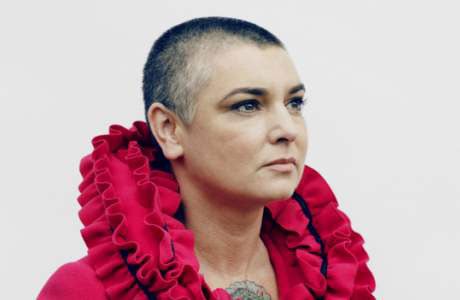
Has there ever been a more conflicted, tragic, talented musician than the bald child advocate, bipolar-afflicted, anal-sex-loving, Pope-picture-tearing, angel-voiced former-priest Sinéad Marie Bernadette O'Connor? In short, no. And though she's been recording and making music since she was 14 years old, O'Connor's actual artistry has mostly taken a backseat to her highly publicized personal problems. Appropriately enough, her new album is entitled How About I Be Me (And You Be You)? But after the last few months O'Connor has experienced ― a quickie Vegas marriage (her fourth!) already on the rocks mere hours after saying "I do," a suicide attempt, public cries for help on Twitter, and her subsequent hospitalization ― she might like a chance to be somebody else for a while. Love her or loathe her, it's impossible to argue: it's tough work being Sinéad O'Connor.
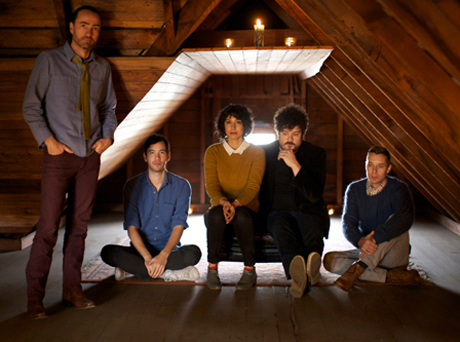
My online news story with James Mercer of the Shins, a preview before the print feature in April.
James Mercer Talks the Shins' 'Port of Morrow'
By Andrea Warner
It's been five long years since the Shins' Wincing the Night Away proved just how far the Portland-based band had moved beyond indie obscurity. Buoyed by the 2004 film Garden State, as the band Natalie Portman promised would "change your life," the Shins lead singer-songwriter James Mercer was suddenly an icon to millions who loved his brand of poetic indie pop: dark lyrics steeped in metaphor contrasted with hooky choruses and breezy melodies.
Then suddenly Mercer made a radical shift, forming a new collaboration with hip-hop producer/songwriter Danger Mouse, aka Brian Burton. As Broken Bells, the duo released a hugely successful full-length and toured extensively, leaving Shins fans to wonder if their beloved band would be another casualty of the indie-goes-mainstream boom. Even Mercer himself wasn't sure.
Larissa Healey, AKA Gurl Twenty Three, is part of the new Beat Nation exhibit at at Vancouver Art Gallery.
By Andrea Warner
A generation of artisans quietly came of age over the last few years at Vancouver’s grunt gallery. They produced the Beat Nation project — originally an exhibition and a website — to showcase the artistic influence of urban youth culture on aboriginal culture. The project hit a nerve. It’s since evolved to include a performance art/hip hop musical collective featuring Kinnie Starr, and last week launched a full-scale, mainstream exhibit at the venerable Vancouver Art Gallery. Beat Nation: Art, Hip Hop and Aboriginal Culture features 20 artists and innovators from across the continent.
And several of those artists are from right here in Vancouver, some of whom were on hand for a media walk-through last Thursday. One woman in particular caught my eye: short and solid, with a feather twisted into one of the long braids coming down each side of her face. She looked tough, but when she smiled everything sparkled with a kind of radiance that made me stop thinking she’d like to kick my ass. Larissa Healey, AKA Gurl Twenty Three, is a street artist who made her rap debut just a few weeks ago at the PuSh Festival. Now, the mural she co-created with Corey Bulpill is on the wall at the VAG. Healey still can’t quite believe that this is how her life is turning out. Standing in a room filled with art by her peers that mixes past and present traditions, Healey opened up about her art, finding her voice and overcoming the darkest aspects of her troubled past.
Hey Ocean’s Ashleigh Ball ‘reins’ over My Little Pony
Being the lead singer of an indie rock band brings its own unique experiences — road warrior fatigue, playing dingy bars, bad pick-up lines. But Hey Ocean’s Ashleigh Ball has an entirely different, not-so-secret second life, that makes being a rock star seem almost normal. As the voices of Applejack, Rainbow Dash and more, Ball is saddle-deep in the animated world of My Little Pony: Friendship is Magic. And that’s where things start to get a little — well, strange.
“It’s pretty weird! That whole thing has just gone crazy,” Ball says, over the phone, having ducked inside a coffee shop to escape the Vancouver rain.
In part, she’s referring to how the cartoon television series — just one of her many voice-acting gigs — is not only hugely popular with its target audience of children, but is also an underground pop culture phenomenon for grown men, known as Bronies. Media outlets all over North America have reported on the craze, which has spawned huge online followings and real-life groups, as well as BronyCons. Yes, conventions dedicated to the television series. It’s where Ball found herself this past January, feted as a guest of honour for her voice-acting work.
“It was pretty crazy,” she laughs. “I actually brought a friend of mine along to document it... I was hoping they would be okay with him coming, and the organizer, a person named Purple Tinker, was like, ‘Of course!’ They paid for him to come as well and treated me like royalty! They put us up in this fancy hotel and I just got to talk about being a pony... He’s going to put together some stuff for a trailer and we’ve got some work to do on it. It was very, very bizarre.”
It’s not the future Ball envisioned for herself as a kid interested in musical theatre.
“I went to a fine arts mini school and did a lot of improv and theatre,” she says. After graduating from the Canadian College for the Performing Arts, she performed in a talent showcase and was scooped up by an agent who ended up representing her at the beginning of her voice career.
“I was originally signed to do TV and film stuff and theatre, but I didn’t have very much success with that,” she laughs. “It’s not something I really ever wanted to do that much. I get a bit camera shy, and I’m not that striking beauty they’re looking for, so the voice work seemed to be the right fit. I was super lucky to get my foot in the door; it’s a really small community of people in Vancouver that do it. I work with people time and time again, it’s very close-knit. I landed some of my first roles six years ago, and then slowly built a bit of a name for myself among the voice directors. And now being a part of a series, like My Little Pony, that’s going crazy, it’s pretty cool.”
For Ball, it’s a weird culmination of six years of hard work, most of which has been also spent balancing her increasingly demanding role in Hey Ocean, one of Vancouver’s hardest working and most popular bands.
“Music is my number one passion and I’ve always wanted to pursue it,” Ball says. “Being in a band takes an incredible amount of commitment, but a lot of musicians have to have side jobs. All the guys in our band have side jobs, whether it’s teaching music or working at a coffee shop or whatever. It’s hard to be a full-time musician, so this is really incredible. It gives me the freedom to not have a full-time job. If I go into the studio once or twice a week, that’s my rent for the month.”
Second jobs might not be the reality for Hey Ocean in the near future. The band has a management deal with Nettwerk Records and recently signed to Universal as their Canadian label. The new album, their major label debut, is expected sometime this summer and they’re about to set out on a coast-to-coast Canadian tour for the month of March. While Ball is grateful for the momentum in both aspects of her creative/professional life, she admits that juggling both isn’t easy.
“It can be a struggle. I use my voice for everything. It’s all I do. That’s kind of weird to think about!” she laughs. “[When we’re on tour], I usually have to come back and do a bunch of scripts I’ve missed out on and then go back on the road. You have to make it work. I’m getting a steady income from the voice-over world and if I do a series, obviously they expect me to be there part of the time. Sometimes I’ve felt like I’ve been burning the candle at both ends. I’ve lost a couple series because of my schedule. It sucks... But I love both of these things so much. They’re both so important to me. I try to keep people happy and keep myself happy.”
Try listening to the title single off Vancouver-based band The Belle Game’s most recent EP, Sleep to Grow, and discover what thousands of people already know: sometimes beautiful music takes six, seven, even eight sets of hands. What began as a three-piece in 2009 with Adam Nanji, Andrea Lo, and Alex Andrew, just kept growing. And growing. And growing. Now Katrina Jones, Rob Chursinoff, and Ian Cook are regular members, though Cook has recently taken some personal time so Marcus Abramzik is filling in. And one can’t forget the Ruffled Feathers’ Andrew Lee, the unofficial seventh member who provides key Belle Game songs their trademark brass flourishes. Wrangling all seven together for an interview is nigh impossible, so Nanji spoke with WE in advance of the band’s show with Aidan Knight this Saturday, Feb. 25, as part of the Winterruption arts and culture festival at Granville Island, giving the scoop about their debut album (three years in the making!), playing in L.A. and why Montreal is second-best to Vancouver.
What’s your background? I’ve always been a music geek; in high school I used to hang out in the band room. When it came time to pick a university to go to, which I promised my parents I would do, I thought, I’m going to go to Montreal because that’s where music is. I really wanted to be a part of a music scene and a music community, and that’s why Montreal seemed like such a good fit. Which it ended up not being. It’s a different type of music community. It’s amazing, artistic and people are there to live and do art, but it’s very insular.
Vancouver’s indie music community seems pretty supportive, at least as an outsider looking in. For sure. There’s a tight-knit community in both cities, but the bands in Vancouver want to foster that community and bring other bands in. When we first met David Ortesi of Hey Ocean, he invited us to go on tour. Hey Ocean, Dan Mangan and Mother Mother kind of started this new wave of the Vancouver indie music scene, but they’re so willing to help everyone. It’s really cool.
You’re playing Winterruption and tour all over. You have an audience that follows you — even without a first album. Is this just the new reality of emerging bands? I think it is. I mean, we could get into a big discussion about the relevance of the album in modern music. But people are so excited about music here and they come to shows. They really appreciate seeing things now that there are lots of venues and we get to play a lot. That’s what really gets to people: the live show. Which is strange, because so many bands have blown up on the internet with just a couple singles. But Vancouver has created this special, safe place where bands can actually play 40-minute sets and that’s how people become fans.
Sleep to Grow was supposed to be your debut full-length. What happened? We recorded enough material to do a full-length, but we were writing newer songs and realized that older stuff wasn’t really who the band was anymore. We recorded all of our growing pains onto an album that will never get heard. Now we’re going in at the end of this month to hopefully finish the last half of the [new] album, which should be ready by September at the latest.
You were in L.A. recently. What was going on? We were doing a music supervision showcase. The lovely Music BC people took some B.C. bands down to L.A. and into the NBC studios and we played for the people who put music in all their TV shows. We were really nervous to go down and play in an office and they were some of the nicest people we’ve met as a band! They were super supportive. They helped set up the PA in their office, they talked about their experiences licensing bands and music. We were expecting a room full of suits at a big long wooden table and they would, like, judge us but in the best way they were just music geeks.
The Belle Game perform with Aidan Knight Feb. 25 at Performance Works, 8pm. $15-$18 from NorthernTickets.com.
Grant Lawrence has championed them, audiences have flocked to their shows, WE readers chose them as their favourite local band and their journey to South By Southwest music festival even got the documentary treatment from the CBC. Now, in just a few short weeks, the Vancouver-based, indie rock five-piece Said the Whale will release its third full-length album, Little Mountain. And if putting out an album and plotting a massive tour weren’t hard enough, the band’s also got an ambitious project to release a music video for every song on the record every Tuesday starting now and spanning 13 weeks, although local fans can see all the videos at a special listening party/screening at the Rio Theatre Feb. 25. WE spoke with co-singer/songwriter Tyler Bancroft about balancing art and commerce, his love of Elvis and little league baseball.
Where’d you come up with the idea for doing a video for every song?
We Are the City did a video for every song on their EP last March and worked with Amazing Factory as well... When you put out an album, you try to drum up all this anticipation, but it feels like a lot of times, the release date comes and you get all excited and then that’s kinda it. We thought if we did a video for every song and release a new one every Tuesday for 13 weeks, it will keep the ball rolling. As much as it was a creative decision to do a video for every song, it was also a business decision.
I’ve noticed that about other Vancouver bands — there’s real innovation regarding the ephemera of music. Without a doubt. We’re over here on the West Coast; we’ve got to differentiate ourselves from the hubbub of Toronto.
What inspired you to name your album after my neighbourhood? It’s my neighbourhood, too! Four of us live, more or less, in Little Mountain. I’m more Mt. Pleasant, but I grew up playing Little Mountain baseball. Little Mountain is also one of the top place names in Canada, but we wanted to name the record something that resonated with us at home but also make a connection for people not from Vancouver.
Where are you taking your inspiration from? Oh man, honestly a lot of my musical inspiration comes from a lot of the bands we’ve met and toured with the last couple years. We Are the City, Aidan Knight, Dan Mangan, Mother Mother, Tokyo Police Club, Hey Rosetta!, the Arkells, Born Ruffians, Yukon Blonde, Hannah Georgas. We listen to all those guys all the time in our tour van. It’s a ridiculous Canadian playlist.
So was singing your first love, or did you play an instrument? I grew up loving music. The first music I was really into was ’50s and ’60s pop. I was a huge Elvis fan. I was actually an Elvis fan before I was a Beatles fan, so there that is. (Laughs) I played a bit of piano but I never learned to read music, I was more interested in ear-training. My musical background is just a wanton desire to play music rather than being classically trained or anything like that. I’m a lover of pop music, so I write songs that I want to hear.
So you’re self-taught? Yeah. I’ve had a band, in some incarnation, since I was 12 years old. Rocking out in my parents’ basement, much to their chagrin. We played stuff inspired by Everclear, the usual alternative ’90s rock. Everclear was my band as a kid, and I was huge into Our Lady Peace. And then when I became a teenager, it was punk rock through and through. I discovered NOFX and that was it for me, it was punk rock for the next five years, and then I just opened my mind. (Laughs) Because punk rock can be very close-minded at times.
Where should people listen to your album in Little Mountain for the full experience? Well, the number one place for me would be the baseball diamond [at the base of Queen Elizabeth park, opposite the new curling rink]. That was a huge part of my life. When baseball season starts, they should go enjoy — and not to sound creepy — but they should go watch a little league game and get a delicious burger or hot dog from the concession stand, maybe a Freezie and maybe a Super Rope licorice, and that’s how they can best enjoy our record.
Said the Whale’s Little Mountain party happens Feb. 25 at Rio Theatre (1660 E. Broadway), 7pm. $10 from NorthernTickets.com.
Delhi 2 Dublin plays March 17 at the Vogue in Vancouver.
By Andrea Warner
In 2006, Sanjay Seran was recruited to play a one-off show at the CelticFest. Six years later, his band Delhi 2 Dublin is one of Vancouver’s most acclaimed live acts, touring the world over with its unique Bhangra-beats-Celtic-rock-world-fusion sound. In essence, D2D is the quintessential Vancouver band, a perfect sonic example of our multicultural mix. Seran spoke with WE about what it means to headline the festival that changed his life.
The band was supposed to be a one-off, but now it’s been six years. Why does D2D work? Because we want it to. Any project can work if people are having fun and willing to put in the work. I think we’ve found that balance. We work our asses off on the business side of things, including the willingness to tour like mad, and then we work even harder at maintaining the relationships in the band. When it’s all said and done, we get on stage and have the time of our lives.
What’s the next album’s direction? The focus for the next album is definitely on our song writing and the approach to the songs. We feel that in the past we’ve had some great song ideas with some great beats but have been a little lacking with regards to fully developed songs. So, for the last three months we have written just over 20 songs and we’ve done so more collectively than we ever have in the past resulting in what I think is a more refined and distinctive D2D sound. In the next two weeks we are going narrow down which songs are going to make the record, which ones get shelved, and which ones should never be heard by ears other than ours.
What elements are critical in separating “good” fusion from “bad” fusion?
The key is to not over think it. If it sounds good, go with it. There is no formula to make music and that still holds with fusion music. Once it starts to become contrived, I usually feel, it’s not going to work. All of us add our style and colour to whatever it is we may be working on and that keeps it organic, no one is faking it and thus it is real.
What does it mean to you to be able to cross genres and cultural divides with your music?It feels absolutely amazing. We’re able to make music which is truly Canadian and represents who we are as individuals. Growing up, there weren’t a whole lot of things that would represent both sides of who I was as a person, the little Punjabi kid and the kid who grew up in Richmond. Now to be able to make music that incorporates those elements and play it for audiences from all walks of life is a real blessing. A lot of the time the best feeling is when people don’t understand the lyrics yet they are totally lost in, and enjoying, the music because then you know it’s the music and emotion that is connecting with them — that sounds so cliche and lame but it really does feel awesome!
Delhi 2 Dublin plays Mar. 17 at the Vogue, 8pm. $30-$35 from VogueTheatre.com.
At Sled Island in Calgary last year, it seemed over half the bands had made the trek over the Rockies from Vancouver. Of those bands, Rococode proved something of a festival darling: tightly wound pop-rock that struck the perfect balance between aggressive and twee. And, oh, the precision. Laura Smith, Andrew Braun, Shaun Huberts and Johnny Andrews made Rococode sound like an act with six albums under their belts. In reality, they didn’t even have one yet — until now. Braun sat down with WE to discuss the long journey of Rococode’s fantastic debut, Guns, Sex and Glory (Feb. 7).
When I saw you play at Sled Island, I had no idea you hadn’t put out your first album.
It’s been done for a year, so we’ve just been sittin’ it on the shelf for the last little while, just trying to make sure all the pieces were in place. Finally we’re almost there.
Why has it taken a year to get it out there?
We finished it and then decided we didn’t want to just put out another album and have it get lost in the sea of indie bands. We got a publicist, an agent, a small label we’re going with through Winnipeg — just so we don’t have to do everything by ourselves.
It seems like a tremendous amount of work.
Definitely. A lot of sitting in front of the computer, unfortunately, and a lot of time waiting and wondering should we just put this thing out there and throw it up online and see what happens? Are we making the right decision by waiting and taking our time and making sure everything is proper, so to speak. And I feel like we did make the right decision. There are some people waiting for it or ready to listen to it now, as opposed to putting out an album and only having 50 of our friends interested and growing from there. Now at least there is a small number of people waiting for it. (Laughs)
Why did you decide to dedicate time and resources to the Rocoblog and the animated shorts?
It’s a really great way to express your personality and your ideas in a bunch of different ways. The animated videos were kind of a nice break — our music is pretty serious, and most of the photos we have up are us looking serious, and we’re not those people necessarily. It’s not all doom and gloom. It was nice to put something out there that was a continuation of our artistic expression and also humourous and weird. (Laughs) Personally, I thought those things were really funny, but maybe there were too many inside jokes. But, yeah, those were a crazy amount of work.
Rococode play the CBC Toque Sessions and Cafe Deux Soleils on Feb. 17. Full details at Rococode.com
For current information, please visit www.TheAndreaWarner.com | I started this blog as a means of archiving my published writing when I began freelancing in 2007. In 2012, I stopped updating it because I was just too busy with my freelancing (this is an excellent problem to have). Since several of the places I worked for in my first five years sort of disappeared from the internet, I'm so happy to have the pieces online and available at my fingertips. You can now find the majority of my writing via my Twitter page (@_AndreaWarner) or FB author page. Thanks!
In October 2007, I finally quit my job and gave in to my writing. It had been a bit of a fight for years, this wrestling between us. Now it's the peaceful chaos of pitching ideas, getting assignments, and being paid to do what I love. (Last updated 2012, freelancing life became much busier and more stable!)